
Introduction
CoreHaptics is a new framework in iOS 13.
It’s an event based audio and haptic rendering API for iPhone (in short, a synthesizer).
Compatible with iPhone 8 or later.
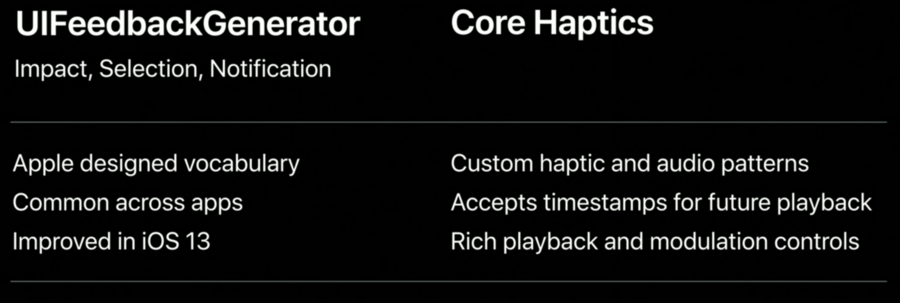
CoreHaptics vs UIFeebackGenerator
CoreHaptics is not a replacement of UIFeebackGenerator, Apple suggests to keep using it for UIKit controls, reactions, and similar.
Sound
We can have a tight connection between audio and haptic.
This has been heavily used internally at Apple for the following applications:
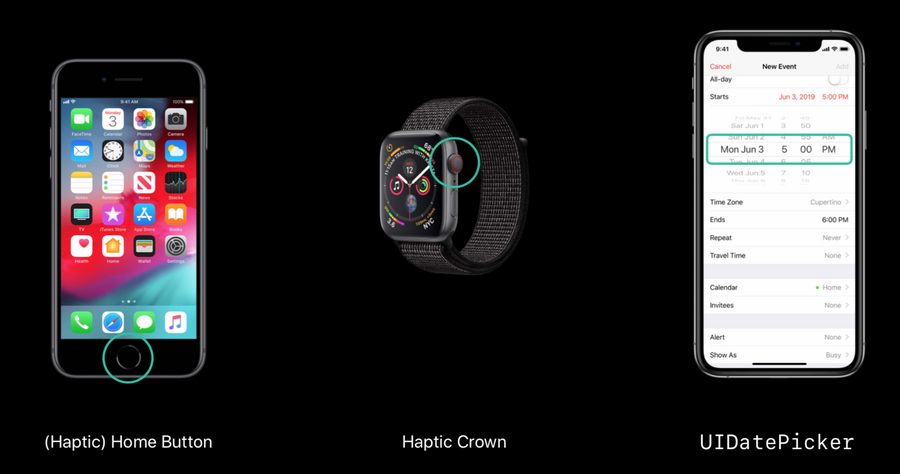
(Yes, all of them have sound!).
Game Examples
This framework is very important for games:
for boosting feeling
simulate physical contact (think of a tennis game, every time the racket hits the ball)
Classes
Two kinds:
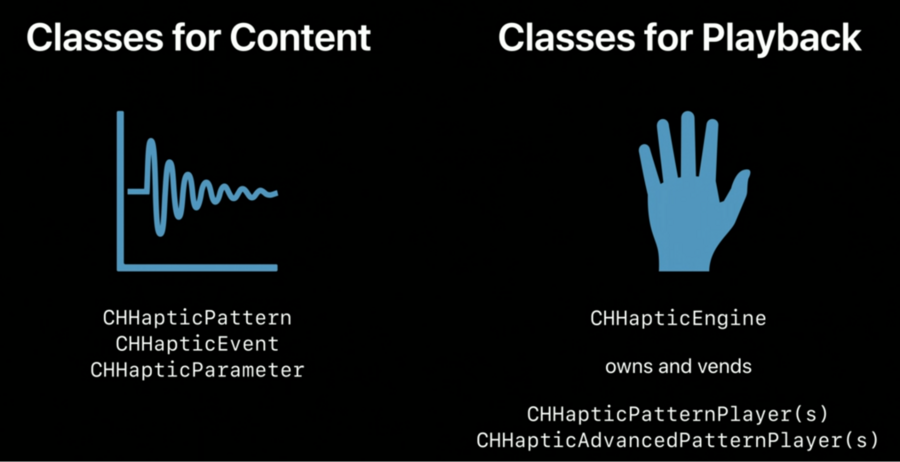
Content classes represent the content itself.
Playback classes play the content.
CHHapticEvent
The basic, indivisible content element.
Each element has a time (period), a type, and, optionally, some parameters.
Multiple Haptic events can overlap, the outcome will be a mix of all of them.
Haptic types
Haptic Transient: momentary and instantaneous
Haptic Continuos/Audio Continuos: lasts longer than transient type, with more parameters to toggle
AudioCustom: we provide the audio to be played in sync with other haptic types
All the CHHApticEvents, are then grouped into Haptic Patterns, CHHapticPattern.
AHAP (Apple Haptic Audio Pattern)
New file format which describes a (Haptic) pattern as text.
It uses JSON.
Can be used with Swift Codable.
