
Introduction
One common, efficient logging mechanism for both user and kernel mode.
Maximize information collected while minimizing observer effect (e.g. because of breakpoints/print you change the timing and the bug doesn’t happen anymore).
os_logcompresses data, and defers lots of work (key point to avoid observer effect)Designed with privacy in mind ️❤️
What’s New
New tools to categorize and filter log messages
Logging system collects caller info for you (
__FILE__,_FUNCTION__etc are automatically collected)New type formatters (more on this later)
New console and command-line tool
Adoption
Legacy APIs (NSLog) are automatically redirected into the new system.
New File Format
.tracev3stored at/var/db/diagnosticswith additional support files at/var/db/uuidtext.logarchiveis basically a merge of the files found in the folders above, it’s used to transfer the logging to other people, bug reports
Subsystem and Categories
Subsystem should be the app/framework domain (your.app.identifier)
Category are the different domains (“store”, “chat”, “account”, …)
Logging Behavior
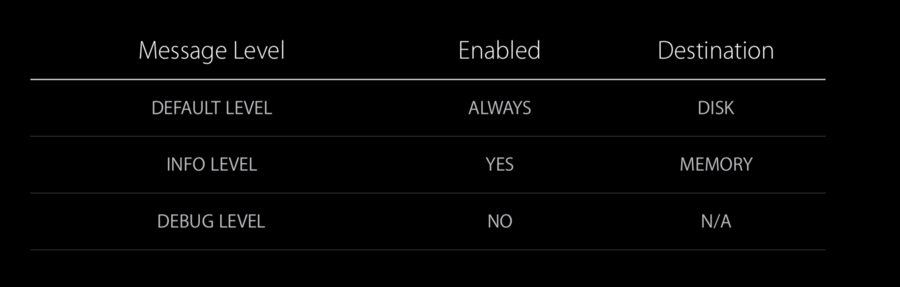
Three basic levels:
Default
Info
Debug
Two special levels:
Fault
Error
Each basic level has two characteristics that can be set for system, subsystem, or category (in the Console app we can mute every single one of them, even the process, even filter by type like error -> you can even save one filter that you create ):
Enabled (does it actually produce a log?)
isItStoredToDiskor Memory (memory: memory buffer, saved to disk only on fault or error)
Levels are hierarchical, therefore by setting Debug to go to disk, implies that Info (and Default) will also go to disk
Default behavior:
Privacy
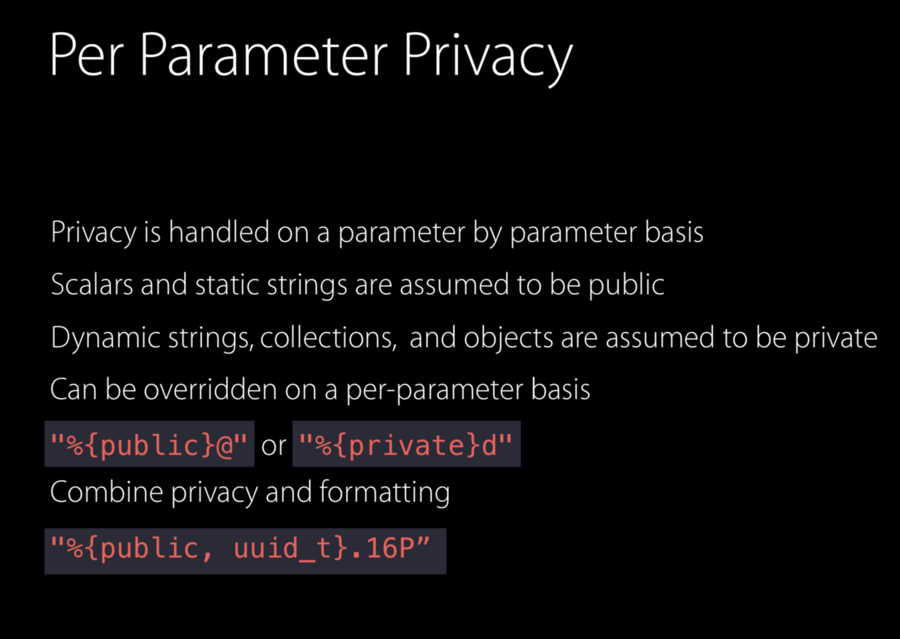
Prevent accidental logging of Personally Identifiable Information (PII)
Dynamic strings, collections, arrays, etc. are assumed to be private
Architecture
Faults and Errors
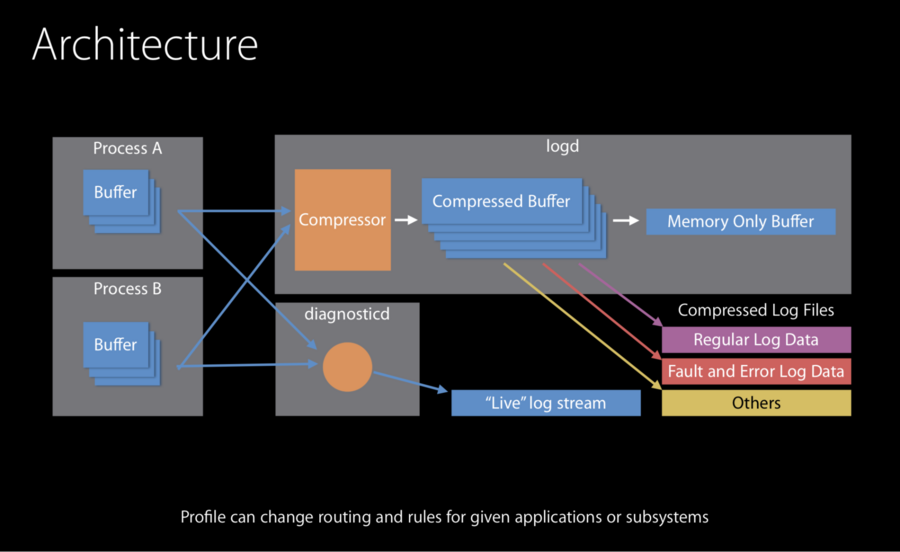
Faults and Error log information are captured into a separate set of log files
Errors represent issues discovered within a given application/library
Faults represent more global problems in the system
APIs
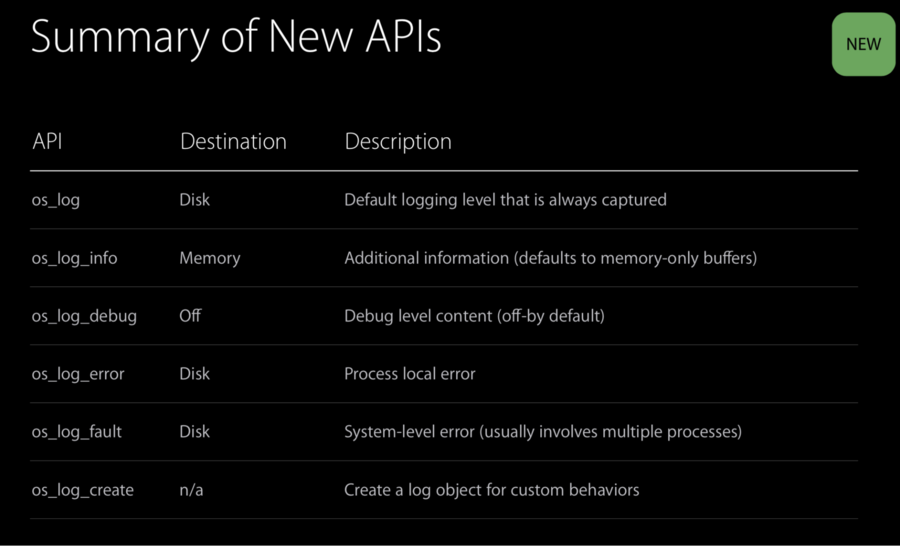
os_log_create:
takes two parameters: the name of the subsystem and the name of the category.
creates a thread-safe singleton object that controls behavior of log messages, here’s how to use it:
os_log(log, "This happened")Type Formatters
We should use these as much as possible as these conversions will be done in the background for us (no observer effect!)
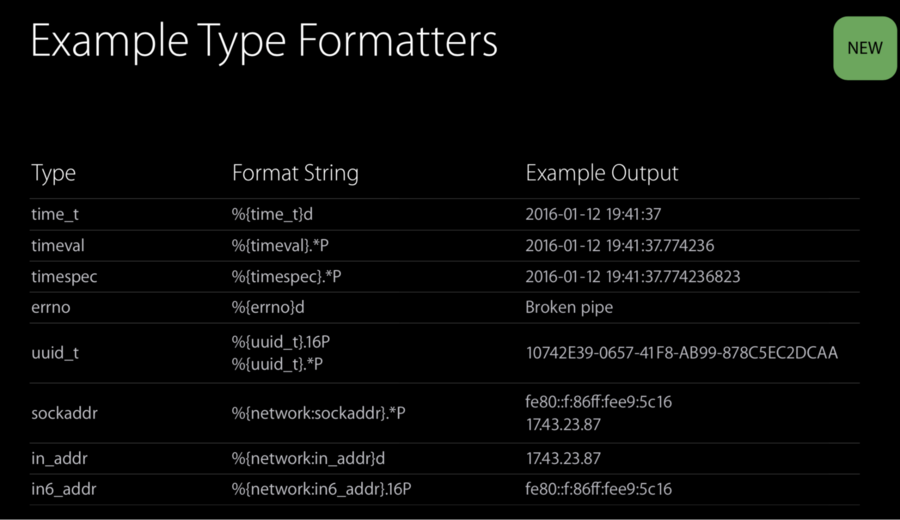
More information here.
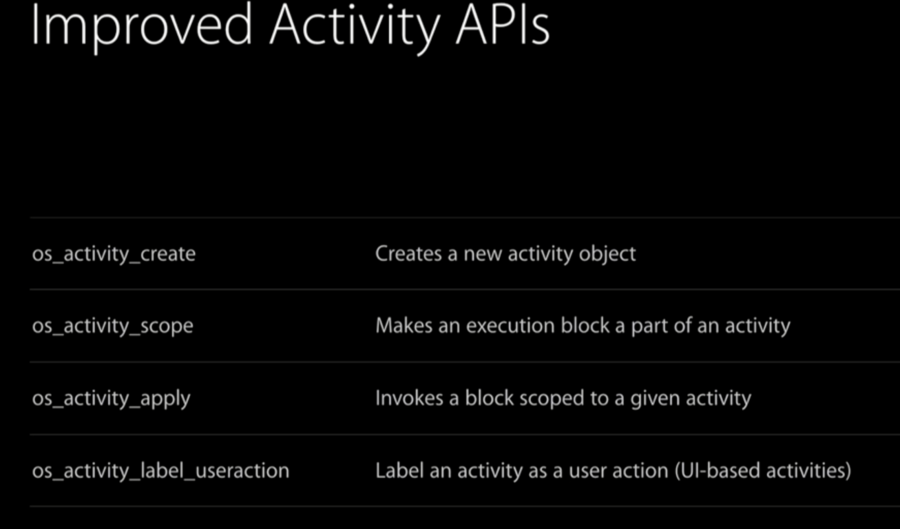
Activity API
Log Command Line Tool
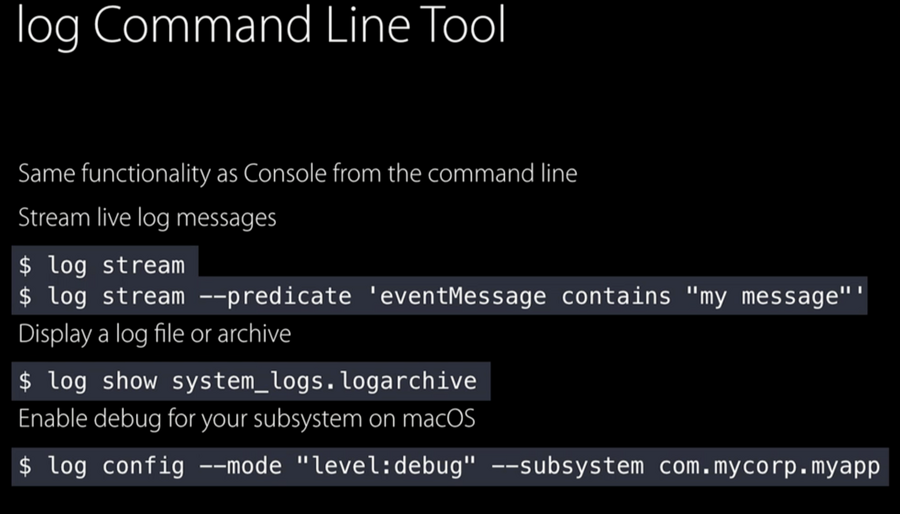
More info here.
